IKEA Pickup Day Checklist: Make Sure It Fits in Your Car
Before pickup, check the exact package sizes, identify the blocker box, and compare that box with your car's trunk opening, narrowest usable width, and usable length. If the blocker box does not work, the trip does not work.
Quick answer
Before you leave for pickup, do these five checks:
- Check the exact package list and box count.
- Identify the blocker box.
- Compare that box with your trunk opening, narrowest floor width, and usable length.
- Decide whether the rear seats must be folded.
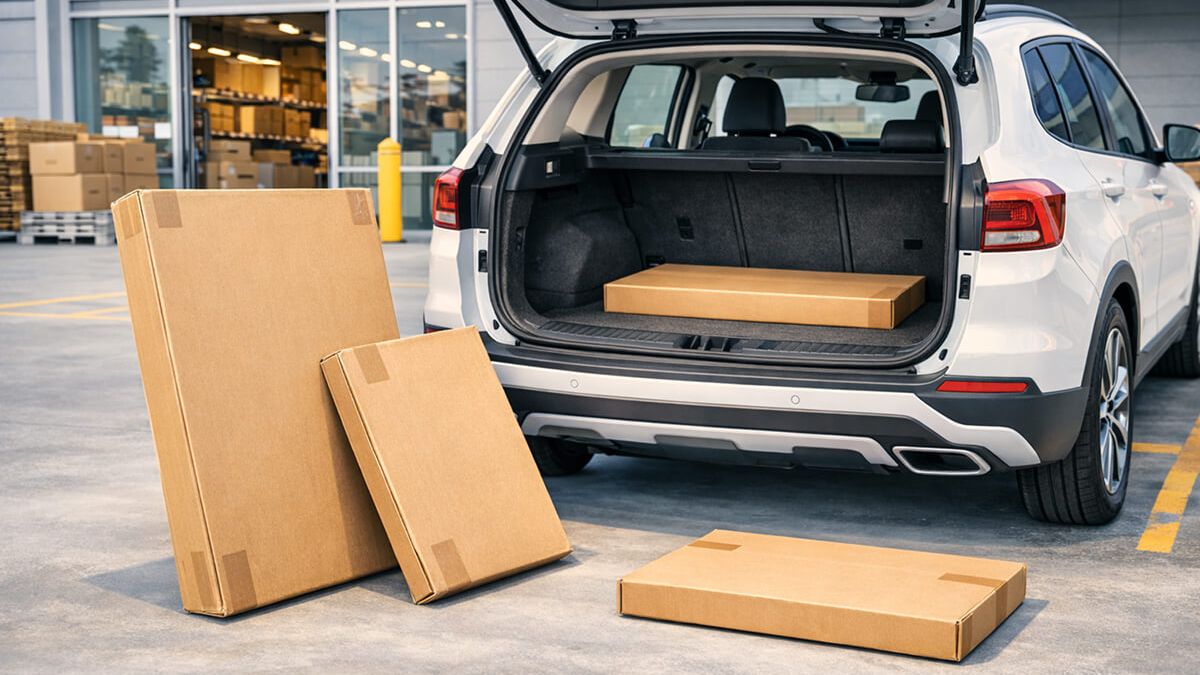
- Load the blocker box first at the store.
Do not plan around the assembled product size or the total order size. Pickup day succeeds or fails on the one box that cannot pass through the opening, settle inside the car, or lie within the available length.
Pickup-day checklist
Use this before you drive to the store:
- Check the exact package dimensions and number of boxes.
- Mark the blocker box.
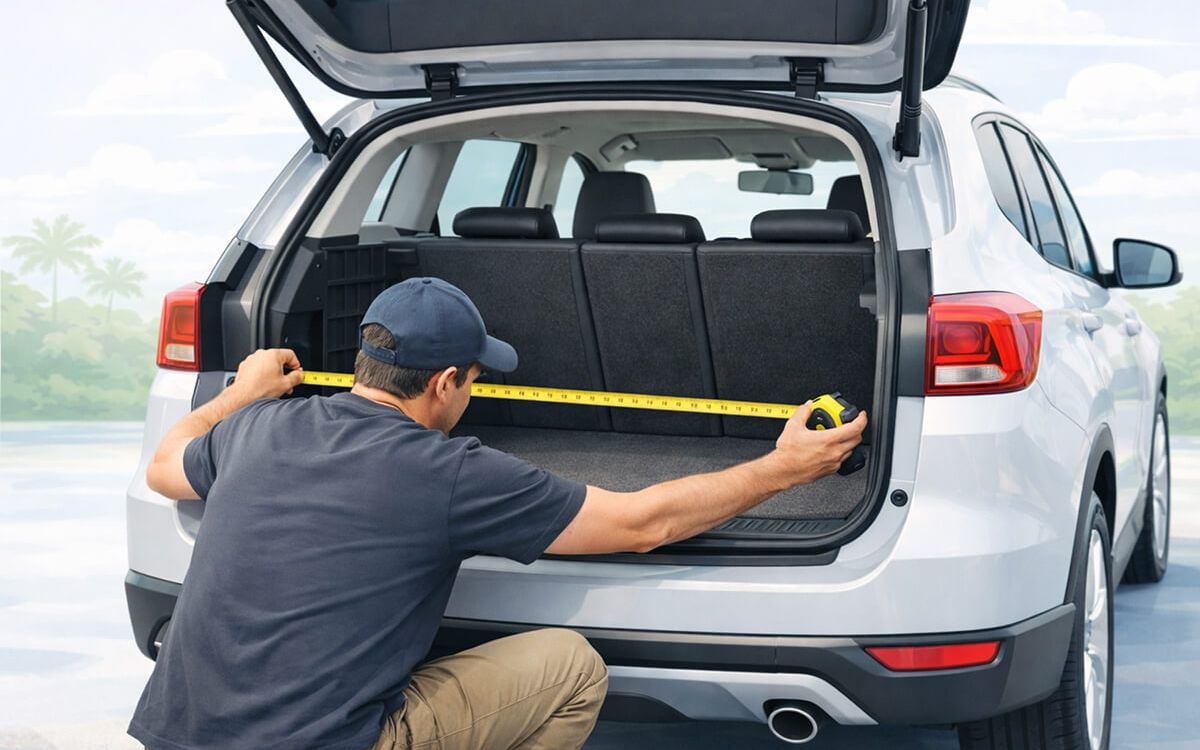
- Check trunk opening width and height if the fit looks close.
- Check narrowest usable floor width.
- Check usable length with seats up or seats folded.
- Remove the parcel shelf or cargo cover if needed.
- Fold the rear seats before leaving if the fit depends on it.
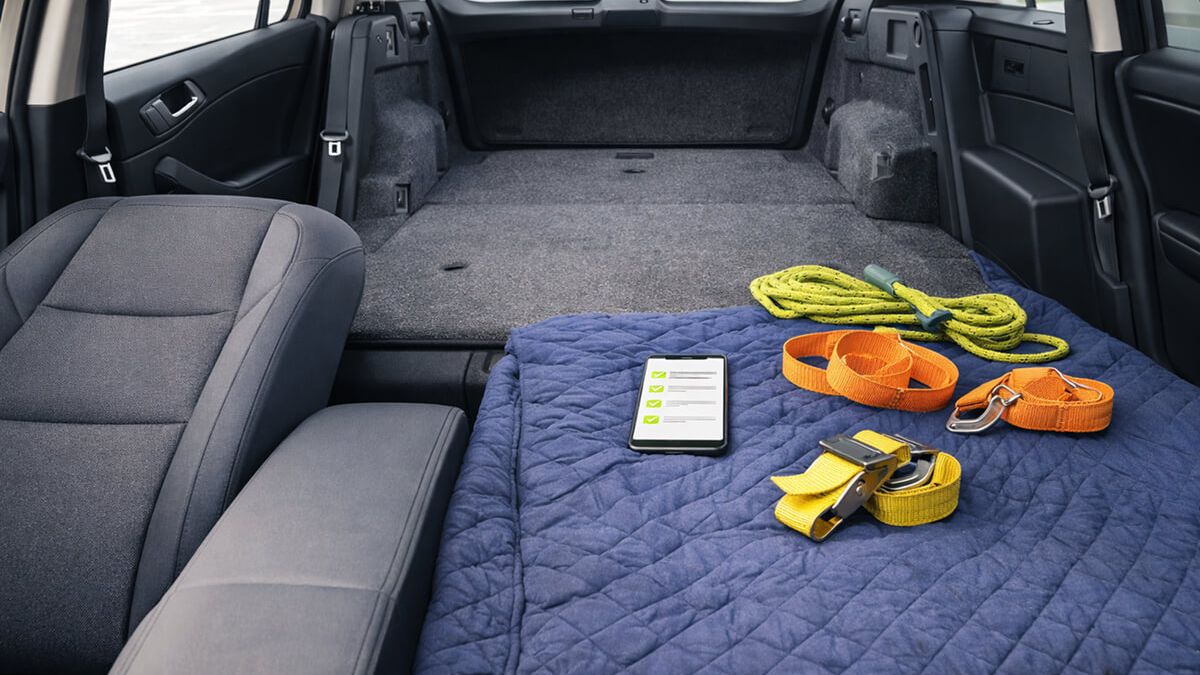
- Bring a tape measure, blanket, and straps.
- Load the blocker box first.
- Stop if the load is unsafe or blocks safe driving.
Check the package list before you even start the engine
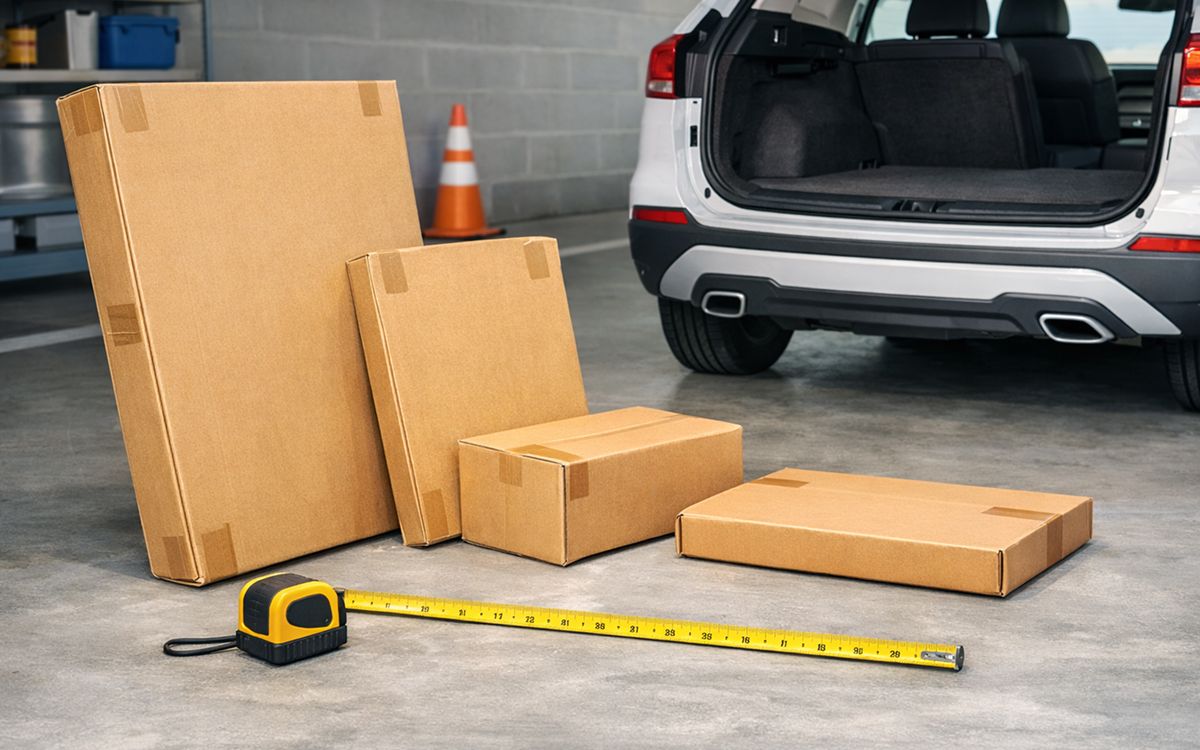
Check the exact package list before pickup. A product page can describe one item, but pickup is about boxes. Some products arrive in one long package. Others arrive in several boxes with very different dimensions. The box that decides the trip is often the one that is hardest to pass through the opening or place inside the car.
Car Fit Check compares packaged dimensions because that is what you actually load. The assembled product size does not tell you whether a rigid box can enter the trunk and settle inside the cargo area. If your result is close, measure your own car before you leave.
Find the blocker box, not just the biggest order
The blocker box is the package most likely to fail. It might be the longest one, the widest one, the tallest one, or simply the one that leaves the least room at a critical point. Once you identify that box, the rest of the trip becomes easier to reason about. If the blocker fits cleanly, the smaller packages often become much easier to place.
A good real example is VIMLE 3-seat sofa with chaise longue in Honda Civic 2022, where the blocker is not the longest box but the widest one: the floor width is what keeps the result borderline.
This is also the simplest way to use the fit result properly. Do not average the whole order in your head. Look at the limiting factor for the package that matters most. The methodology article How we calculate fit results explains why a single dimension can dominate the decision.
If your order has multiple large boxes that all look challenging, list them from hardest to easiest before you leave home. That becomes your loading order at the store.
Match the package to the right car constraint
Fit problems usually come from one of three places: the hatch opening, the narrow interior width, or the usable length of the cargo area. Each one needs a different response. If the opening is too small, there is no point thinking about deeper space inside. If the interior width is the issue, the box may enter the trunk but fail deeper near the wheel arches. If the problem is length, the solution might simply be folding the seats before pickup.
Use the right measurement for the right problem
- Trunk opening: can the box enter?
- Narrowest usable width: can it settle at the tightest point?
- Usable length: can it lie flat in the setup you will actually use?
On a close fit, these checks matter more than cargo volume.
Matching the box to the right constraint gives you a useful plan. Opening problem? Remove obstacles and verify the true pass-through size. Interior width problem? Check the floor where the box will rest. Length problem? Decide seats up or seats down before you leave. That logic sounds simple, but it prevents the most common pickup-day confusion, which is focusing on the wrong number.
Prepare and load the car
Pickup day goes smoothly when the car is already ready. Empty the trunk, remove loose items, and decide in advance whether the parcel shelf, cargo cover, or trunk mat needs to come out. If the result only works with seats down, fold them before you drive to the store. The right setup should already be waiting for the first box.
Preparation reduces loading mistakes. When the trunk is empty, loose parts are removed, and the seats are already in the right position, you can test the blocker box immediately and load the rest around it.
Bring these with you
- Tape measure for one last close check.
- Blanket to protect trim and box corners.
- Straps or tie-downs if the load could shift.
- Enough clear cabin space if a long box needs to extend forward.
Load the hardest package first, then build around it
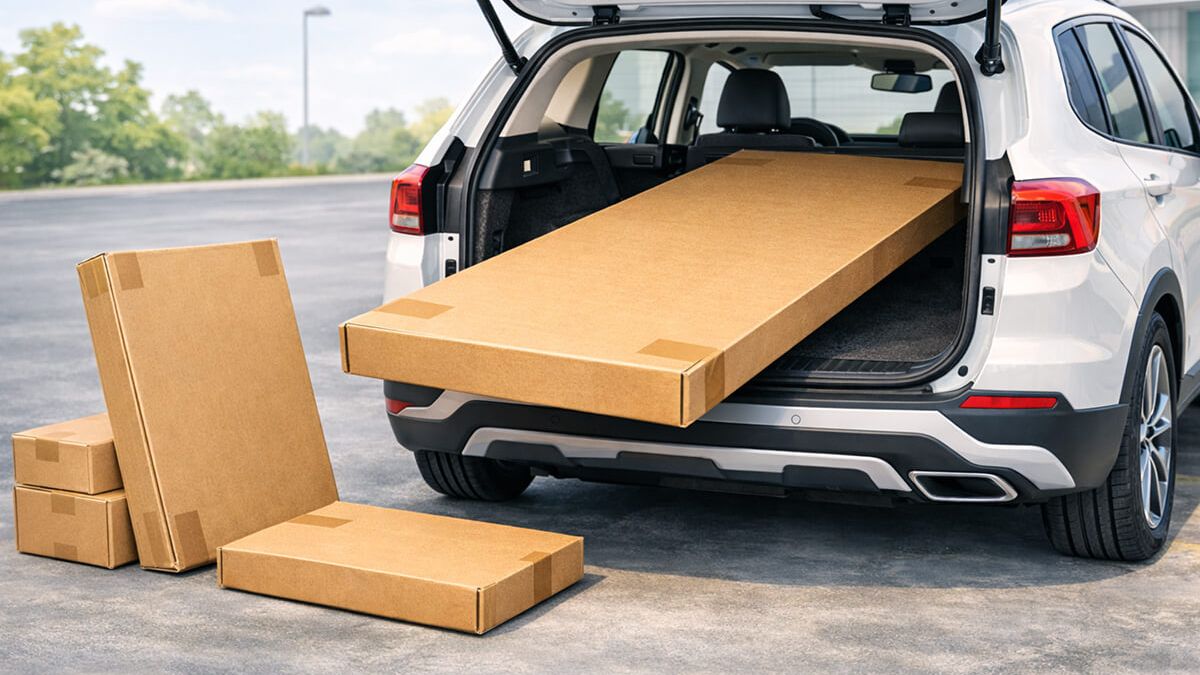
The first box into the car should be the one most likely to fail. That gives you the answer immediately. If the blocker box does not clear the opening or settle into the planned position, there is no benefit in loading the easier boxes first. You only make the retry slower and messier.
Once the difficult package is in place, the rest of the order becomes a space-management problem instead of a yes-or-no problem. Smaller boxes can fill the remaining gaps. With multi-box items, think in terms of anchor package first, support packages second. That simple sequence makes a surprisingly large difference in real loading situations.
Know when to stop and switch plans
Set a stop rule before pickup. Stop early if the opening is clearly too small, if the box only works with unrealistic twisting, or if the final setup would block visibility or a safe driving position. A safe fallback is better than forcing a failed plan.
In practice, the fallback is usually simple: delivery, another vehicle, or splitting the order into more than one trip. The sooner you choose that fallback, the less time you lose. What wastes time is the long middle phase where you keep trying to force a plan that already failed.
Secure the load for the drive home, not just the loading photo
A box “fitting” is only half the job. The second half is whether it can travel home without shifting, damaging the interior, or making the car unsafe to drive. Use blankets where trim or box corners rub, keep the heaviest package low and stable, and secure anything that could slide under braking.
This is especially important when the box extends into the cabin or uses the seats-down configuration. It may technically fit, but the trip still needs to be safe and comfortable enough to finish without panic. If the final setup does not feel stable, your loading plan is not done yet.
Frequently asked questions
Should I plan around the assembled product size or the package size?
Always plan around the packaged dimensions. Pickup-day success depends on the box that has to pass through the hatch and sit inside the cargo area.
What if the product has more than one package?
Treat each package as its own loading problem. The hardest box decides whether the trip works, and the full set may still need a careful loading order or more than one trip. For a multi-box example, see NORDLI chest in Tesla Model Y 2023, where all 4 packages fit individually, but the loading order still matters.
If the item only fits with seats down, should I fold them before I leave home?
Yes. Set the car up before pickup so you arrive ready to load in the exact configuration the result depends on.
What should I bring with me on pickup day?
Bring a tape measure, one or two blankets, and simple straps or tie-downs if the load is tight. Those small tools solve most real pickup-day problems.
When should I stop trying to make the box fit?
Stop when the opening is already too small, when the box only works with unrealistic twisting, or when the final load would not be safe to drive home with.
Does cargo volume tell me if a box will fit?
No. Cargo volume does not tell you whether the box can pass through the trunk opening or clear the narrowest point inside. For boxed items, opening width, usable width, and usable length matter more.
What matters most on a close fit: opening, width, or length?
It depends on the box. Long flat-pack boxes often fail on usable length. Bulkier boxes often fail at the opening or at the narrowest interior width.