How Car Fit Check Calculates Fit Results
Car Fit Check compares package dimensions with a car's real loading constraints. Each package is checked against the trunk opening, usable interior width, and usable length for the relevant seat setup, then the tightest margin decides the result.
Quick answer
Every fit result follows the same logic:
- Check package dimensions, not assembled size.
- Check the relevant car constraints for each seat setup.
- Find the tightest margin.
- Turn that margin into YES, MAYBE, or NO.
If the package cannot clear the trunk opening, deeper cargo space does not matter. If it clears the opening but becomes tight at interior width or usable length, that tightest point decides the answer.
What data goes into the check
Package data comes first
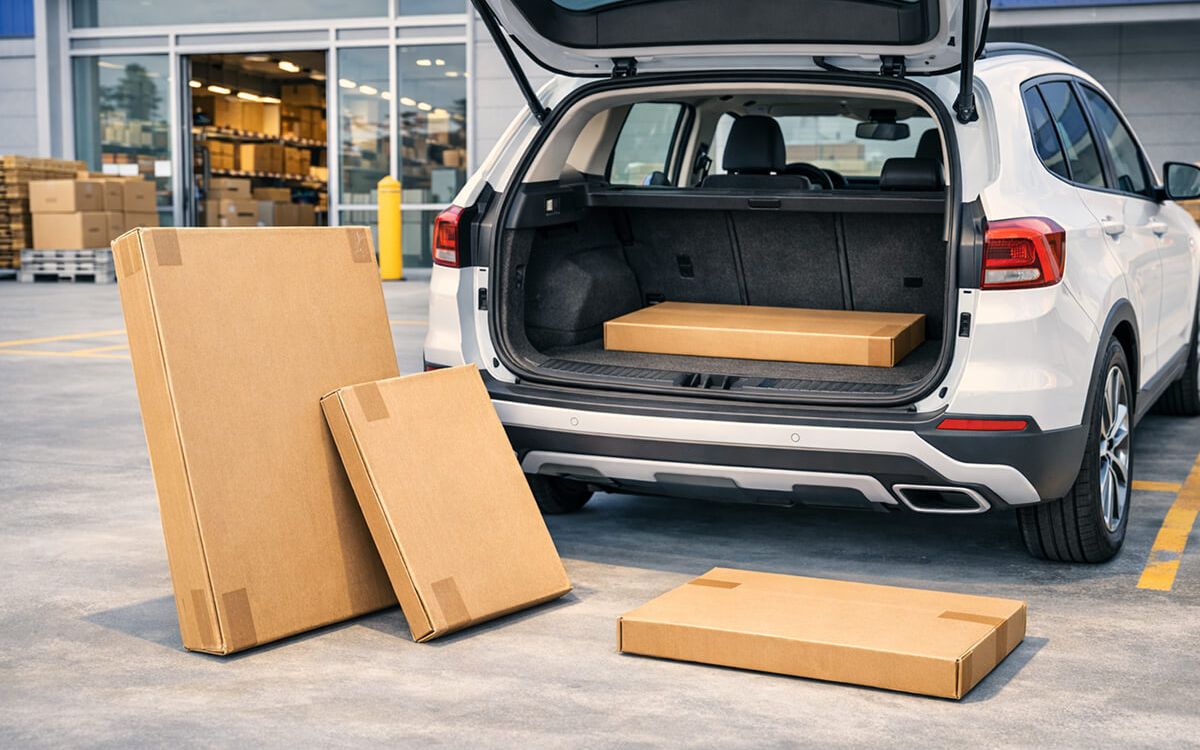
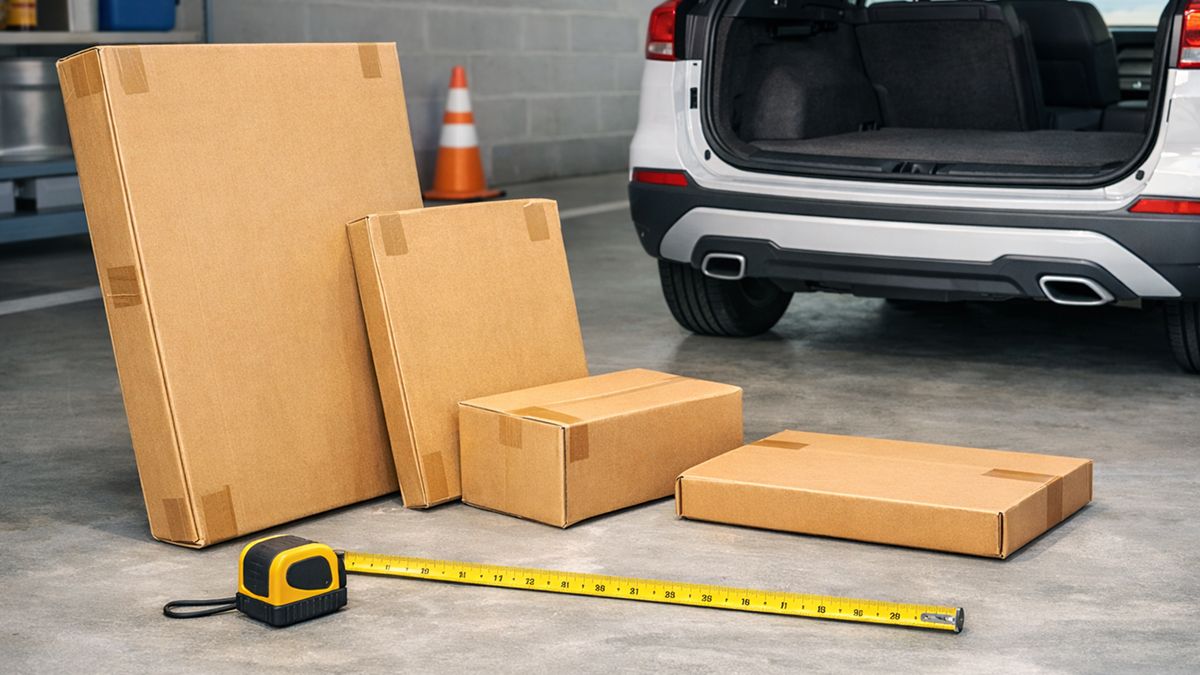
Package data comes first because boxes are what you load. For flat-pack products and other boxed items, assembled size often has little value for the real transport decision. That is why Car Fit Check focuses on package count and package dimensions rather than showroom size.
For a tight real example, see ROSENTORP extendable table in Skoda Octavia 2013: with the rear seats folded its biggest box clears the floor, and the trunk opening width becomes the blocker on a borderline result.
Vehicle cargo data completes the picture
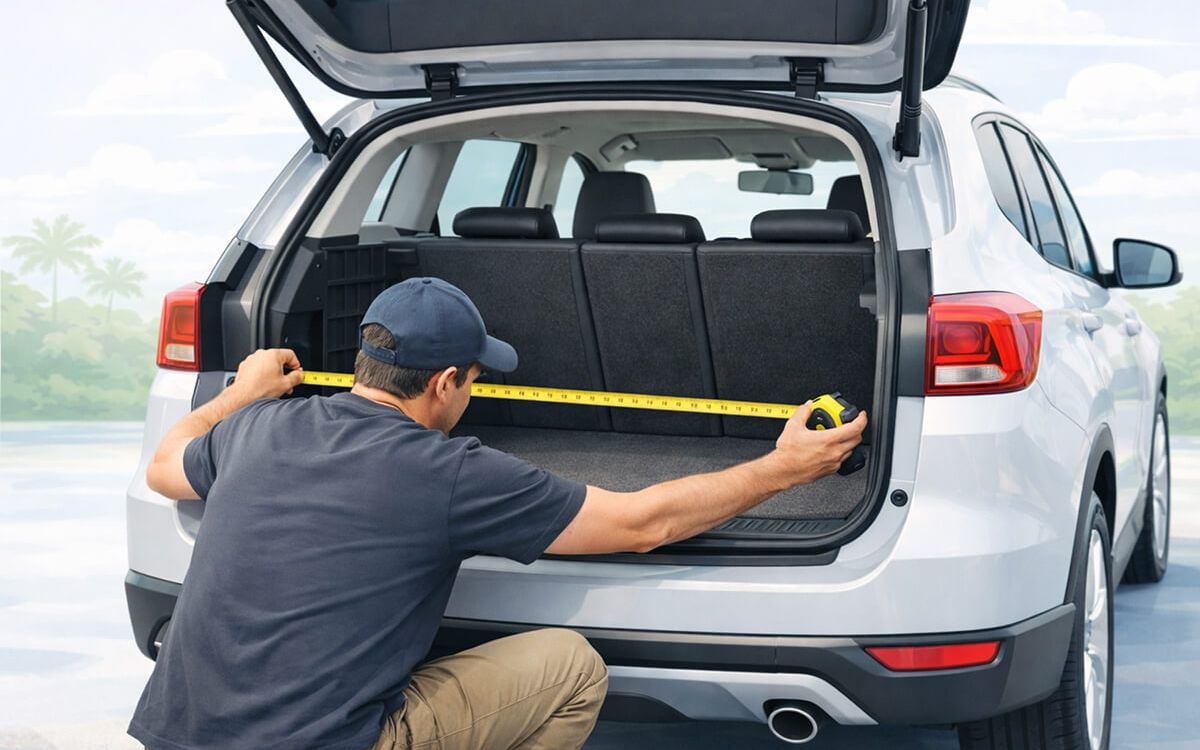
The second input is vehicle cargo data. That includes the trunk opening and the interior space that matters once the package is inside. A car may be large enough in one sense and still unusable in another, which is exactly why a single volume number is not enough.
Use the right measurement for the right problem
- Trunk opening width and height: can the box enter?
- Usable interior width: can it settle at the tightest point?
- Usable length: can it lie flat in the seat setup you will actually use?
A single cargo-volume number cannot answer those checks.
If you have ever seen a package pass halfway through the hatch and then jam against the wheel arches, you have already seen why the system separates those constraints.
Why package checks and seat setups matter
Products are checked per package
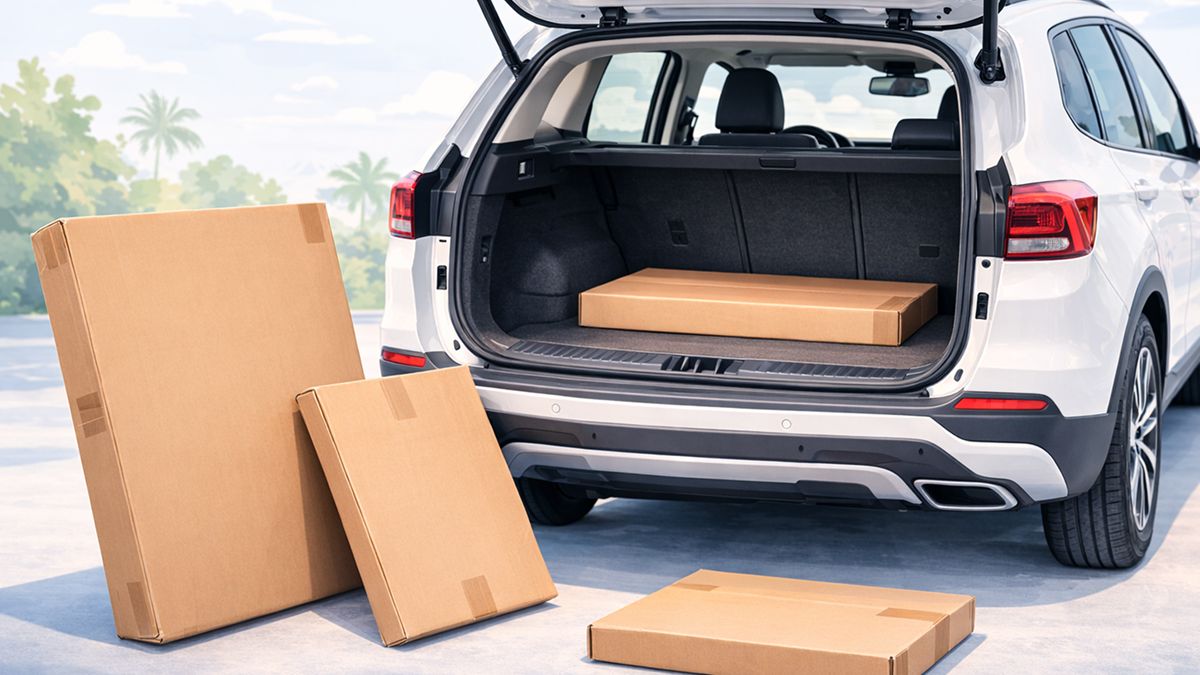
A multi-box item is several loading problems, not one. Each package is checked separately because one long or wide box often becomes the blocker for the whole product.
Seat setup can change the outcome
Seat setup changes usable length, and sometimes the final result. A box that fails with seats up can become a clear YES once the rear seats fold, which is why Car Fit Check checks each relevant setup separately.
A clear example is NORDLI chest in Tesla Model Y 2023, where seats up is MAYBE but seats down becomes YES.
That is also why How to measure your trunk correctly keeps seats-up and seats-down length separate. The fit result is only as good as the loading setup you compare it against.
How margins become the result
The limiting factor decides the answer
The limiting factor is the tightest measurement comparison for the best way of loading the box. A margin is the real gap there, the car's measurement minus the box's: positive means room left, negative means the box is too big by that much. That tightest gap decides the answer, whatever the other measurements say.
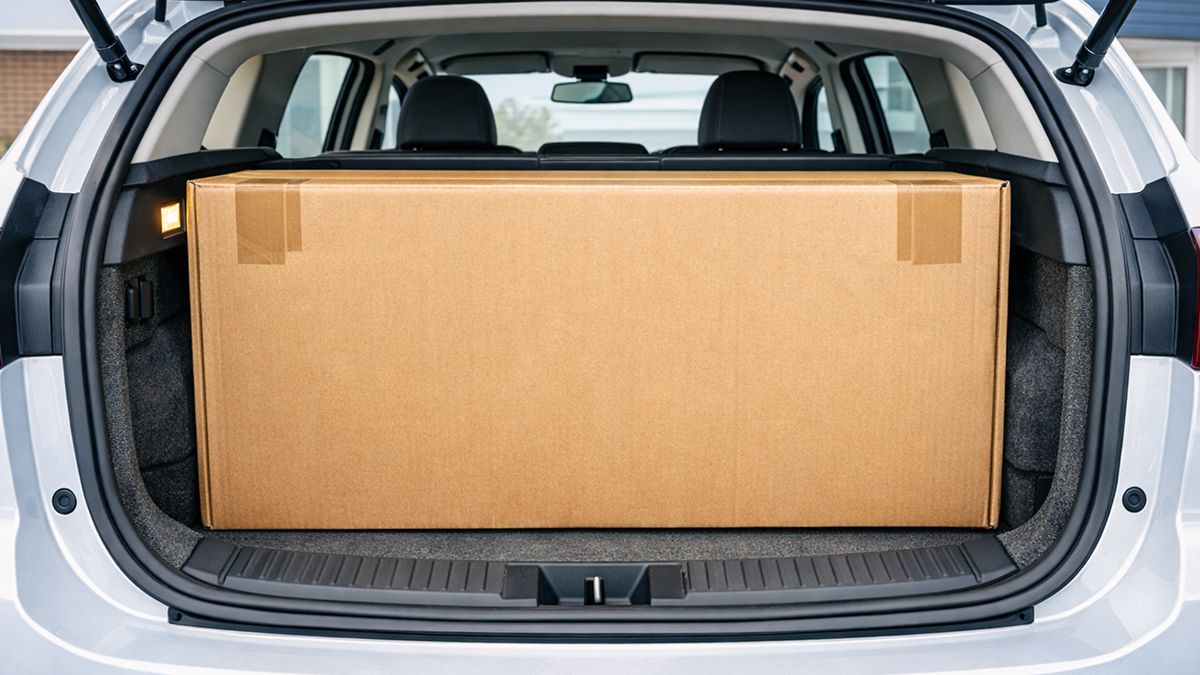
If everything else fits but the box is 1 cm (under half an inch) too big for the opening, the opening wins: the package never gets inside, so the deeper cargo space no longer matters. It works the other way round too. A box that slips through the opening but is longer than the floor is still a no.
YES, MAYBE, and NO each mean something specific
- YES: there is at least 6 cm (2⅜″) to spare at the tightest point, in the best way the box can go in.
- MAYBE: it fits on paper, but with less room than that, so trim, cargo covers, and loading angle can change the outcome.
- NO: the box is bigger than the space at its tightest point, whichever way it goes in.
Deterministic logic matters
Deterministic logic matters because users need a result they can follow. The same package and the same vehicle inputs should produce the same answer every time.
What the result does not promise
A fit result is not a promise that:
- every box from a multi-package order will fit stacked at once
- your car is empty and ready to load
- unsafe loading becomes acceptable
- close packaging differences will never matter
The result explains the loading problem clearly. It does not replace judgment on safety, visibility, or how much is already in the car.
How to use the result well
Use the result in this order:
- Read the answer.
- Check the limiting factor.
- Compare the tightest measurement pair.
- Decide whether seats must be folded.
- Measure your own car if the result is MAYBE.
- Load the hardest package first.
For the practical loading side, see IKEA Pickup Day Checklist. For the measurement side, see How to measure your trunk correctly. If you just want the short product overview, go to How it works.
Frequently asked questions
Do you compare assembled furniture sizes?
No. Car Fit Check uses packaged box dimensions because that is what has to pass through the trunk opening and fit inside the cargo area.
Why can one product have different results for different seat setups?
Because usable cargo length changes when seats fold. The same package can fail with seats up and work comfortably with seats down.
What does the limiting factor mean?
It is the measurement that most strongly decides the result for that package and setup. It might be opening width, opening height, interior width, or usable length.
Does MAYBE mean missing data?
No. MAYBE means the fit is borderline. The data exists, but the available margin is small enough that loading precision and real-world obstacles matter more.
Does a YES result mean every box from a multi-package item fits at once?
Not necessarily. Results are computed per package. A product may contain several boxes that each fit individually but still require careful loading order or more than one trip.
Does cargo volume tell me whether a box will fit?
No. Cargo volume cannot tell you whether the box can pass through the trunk opening or clear the tightest interior width. For boxed items, opening size, usable width, and usable length matter more.
Can trim, mats, or trunk covers change a close fit?
Yes. On a close fit, small real-world obstacles can reduce the usable margin. That is why MAYBE results should be measured on the exact car before pickup.